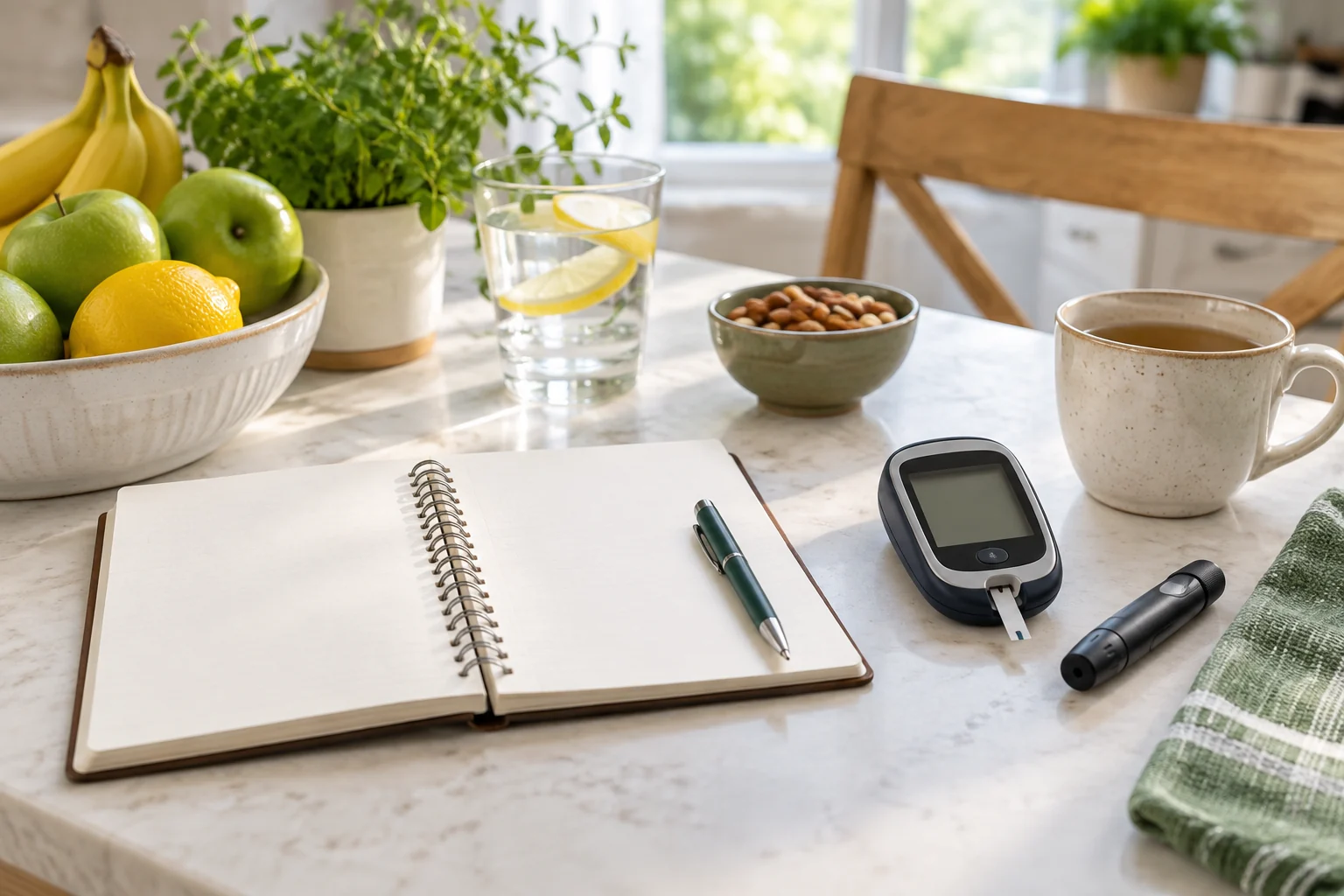
A glucose reading is information about your body at a particular moment. It is influenced by food, activity, medicines, illness and other factors. It is not a measure of your character or a complete account of how much work you have put into your care.
A finger-prick meter measures glucose in a small blood sample. A continuous glucose monitor, or CGM, estimates glucose from fluid beneath the skin and shows patterns over time. HbA1c is a laboratory measure reflecting average glucose over roughly three months. Each offers a different piece of the picture.
Check the units and your personal targets
Australia commonly uses mmol/L for glucose, while many US resources use mg/dL. To compare them approximately, multiply mmol/L by 18 or divide mg/dL by 18. Confirm the units on your device before interpreting any number.
Common targets for many non-pregnant adults with diabetes are 4.4–7.2 mmol/L (80–130 mg/dL) before meals and below 10.0 mmol/L (180 mg/dL) about two hours after a meal starts. These are examples, not personal instructions. Pregnancy, age, medicines, other conditions and low-glucose risk can change your targets. Ask your team to write yours down.
Read patterns as well as individual results
A CGM can show direction and how much time you spend inside your agreed range. Many adults use 3.9–10.0 mmol/L (70–180 mg/dL), but the appropriate range and time-in-range goal are individual. Reducing lows matters alongside reducing highs.
HbA1c can help your team judge longer-term treatment, but an average can hide swings between high and low readings. Anaemia and some other conditions can affect its accuracy. Bring your meter or sensor report to appointments and ask what pattern is most useful to work on first.
Respond promptly to a low
Below 3.9 mmol/L (70 mg/dL) is generally considered low; follow any earlier action threshold in your personal plan. If you are awake and can swallow safely, take 15 grams of fast-acting carbohydrate, such as glucose tablets measured by their label. Recheck after 15 minutes and repeat if still low. Once recovered, follow your plan for a snack or meal. Children may need different amounts.
If someone is unconscious, having a seizure or cannot swallow safely, call emergency services. Do not give food or drink by mouth. Give prescribed glucagon if available and you know how. Seek urgent help if a low does not improve.
Know when high glucose needs urgent help
For a high reading, follow your agreed correction and sick-day instructions, including ketone testing when advised. Contact your team urgently if glucose remains high despite treatment or you have elevated ketones. Do not exercise to bring glucose down when ketones are present.
Vomiting, abdominal pain, deep or rapid breathing, fruity-smelling breath, severe drowsiness or confusion can signal diabetic ketoacidosis or another emergency. Seek emergency care immediately; do not wait for a particular reading. Ketoacidosis can sometimes occur without very high glucose. Severe dehydration or confusion with high glucose also needs emergency assessment.
Check an unexpected result sensibly
If a meter result seems wrong, wash and dry your hands and repeat with a fresh strip. If sensor readings do not match how you feel, use a finger-prick check as directed by your device instructions and care plan. Sensor readings can lag when glucose is changing quickly. Do not delay treatment for serious symptoms while trying to obtain a perfect measurement.
Monitoring schedules vary. Ask when checking will help you make a decision, and how to respond. More readings are only useful when you understand what to do with them.
Bring one useful question to your team
Keep a short note alongside a repeated pattern: time, meal, activity, medicine and how you felt. Then ask a specific question, such as why lows happen after your evening walk or what to do on sick days. Avoid changing several things at once without guidance.
Lifestyle habits support diabetes care, while medicines may remain essential. People with type 1 diabetes need insulin; do not stop it because a reading improves or you are eating less. A written plan can make both ordinary days and unexpected numbers easier to navigate.
Sources & further reading
This article offers general education, not personalised medical advice. Your diabetes type, medicines and health conditions affect what is right for you. Do not stop or adjust prescribed treatment based on this article. Speak with your healthcare team about changes to your care.